Racist Word of the Year
At its best, language can bring us together in shared humanity. But we also see how it can dehumanise and license racism and xenophobia.
The Racist Word of the Year shows how words shape public and policy conversations and can divide us on racial lines – and what we can do to bring people together.
Approach
The Racist Word of the Year 2025 is based on observational research conducted in November 2025 covering the period January to November 2025. The research draws on platform analytic data, public statements, social media posts, videos and secondary academic and journalistic analyses. It examines patterns of rhetoric and language of prominent figures in the United Kingdom associated with the far and nativist right, including Nigel Farage, Stephen Yaxley-Lennon aka Tommy Robinson and Katie Hopkins.
The selection of Racist Word of the Year is based on a combination of factors including the frequency of use and the potential power of word to normalise racism and xenophobia. The word is chosen by Reframing Race and members of our Advisory Board.
Key themes
Across speeches, videos and social‑media posts, several themes recur with notable frequency. In various ways (see table below) far and nativist right figures argue that white people are under threat and in a fight for survival.
Theme | Example language |
Migration as an existential threat | ‘invasion’ and ‘flood’, ‘illegality’ |
Protection and defence | protecting ‘our children,’ ‘our women,’ ‘our homeland’ |
Us versus them | ‘ordinary Britons’ versus ‘elites,’ ‘migrants’ |
Cultural/religious framings | ‘heritage’, ‘Christianity’ (in opposition to Islam), 'values,’ ‘cultural decline’ |
Victimhood and censorship | ‘silenced,’ ‘ignored,’ ‘censored’ |
Shortlisted words
A number of Racist Word of the Year contenders emerge from the analysis. ‘Immigration’ and ‘migrant’ frequently show up as does the term 'invasion’ - designed to create a sense of existential threat.
Other words specify the nature of threat. ‘Christianity’ is frequently mentioned – in opposition to 'Islam'. Meanwhile, 'traitor,' 'patriot' and 'illegal' are very commonly occurring. And the use of words such as ‘rape’ and ‘women and girls’ show how the far and nativist right attempt to add respectability and morality to their cause by apparent opposition to gender-based violence.
The Racist Word of the Year
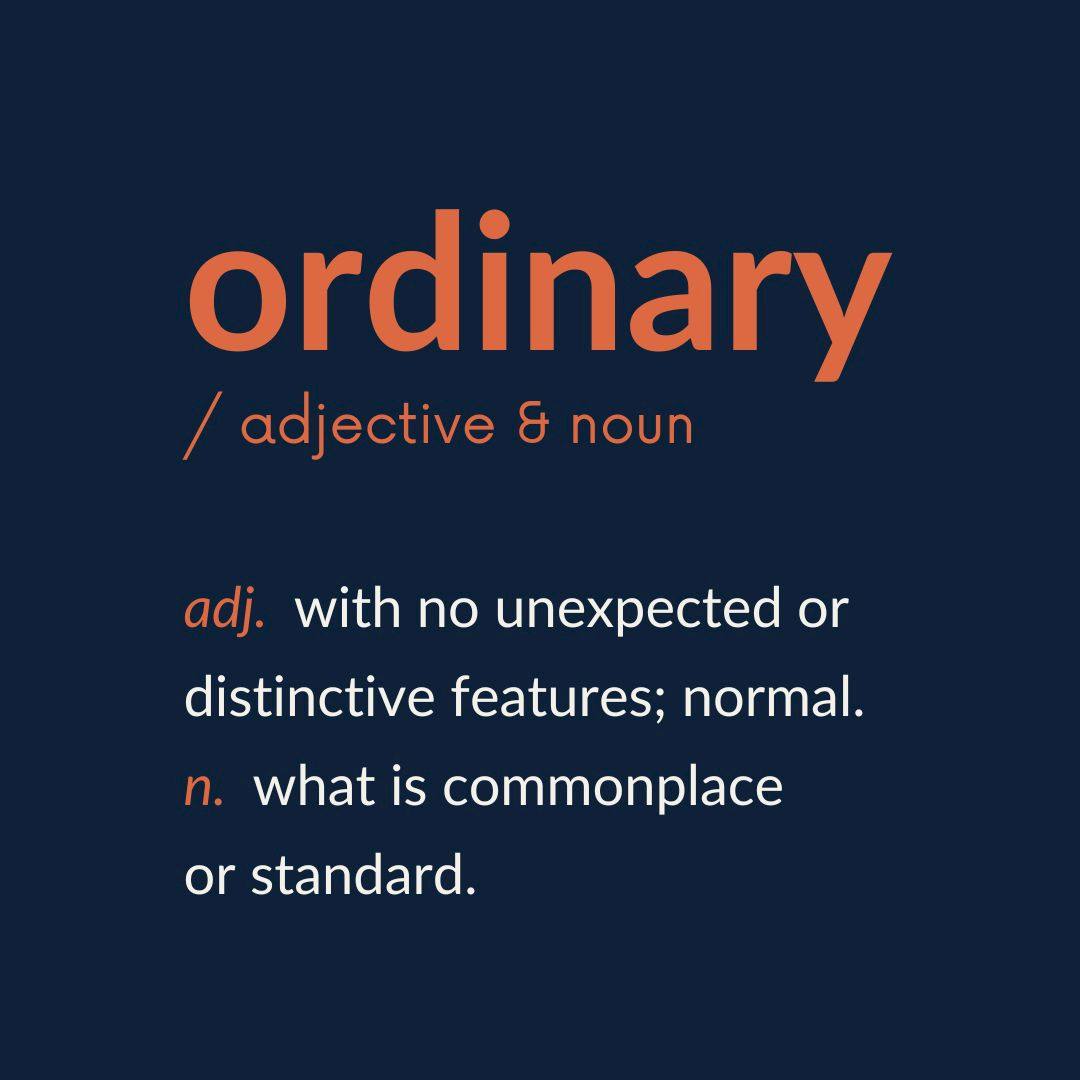
In our final analysis 'ordinary' is the Racist Word of the Year 2025.
The dictionary definition of ordinary is innocuous:
adj: with no unexpected or distinctive features; normal.
n: what is commonplace of standard.
The word becomes racially loaded when use in a binary to make a false separation between migrants or people of colour and ‘ordinary Britons,’ ‘ordinary British people’ or simply ‘ordinary people.’ In these cases, the aim is to make normal the idea that to belong on these islands is to be white, British and Christian. Therefore people who are Black or brown, Muslim, Jewish and/or those with recent or historic migration backgrounds cannot belong, are a lower form of humanity and can be treated callously and ultimately removed.
This use of 'ordinary' is subtle and novel. It is going somewhat unnoticed and its power to exclude and degrade the humanity of the others seems to be growing.
It also has a second dimension. Ordinary is in opposition to elites who have supposedly betrayed ordinary white Brits and failed to defend their so-called interests. Far and nativist right figures insist that they are ordinary and that only they and people like them can save the day.
A response
There are multiple things that we can all do to resist language that dehumanises and help to focus on our shared humanity.
Notice and challenge
The far and nativist right have a focus on language that calls people to their cause. To resist racism and xenophobia we need to pay more attention to the destructive power of words in our public and policy conversations.
New ways of talking
New ways of talking about ‘race’, racism and migration can push back on division and bring healing. Reframing Race’s 20,000-person message-test study shows how we can talk in ways that brings people towards anti-racist and anti-xenophobic ideas. See our new anti-racist curriculum to learn how to make our words count and bring us together.
Anti-racist futures
Ultimately, the answer to the far and nativist right is to paint pictures about life-affirming futures that we can build, together. Real transformative anti-racist solutions are not about one group winning while others lose. They are about making things better for everyone.
And the good news is that those positive futures are being built here and now.
--
NOTES
Reframing Race would like to acknowledge and thank its Research Fellow, Nick Treloar for the excellent investigative research and method that drives The Racist Word of the Year 2025.
Outside of the debate on belonging, society and migration, ‘ordinary’ can and is used without racist intent.
If you would like to know more about the research methods behind the Racist Word of the Year please contact: reframe@reframingrace.org.]